
Caught short
The Energy Minister replaces one fanciful climate target with a second that's even more absurd

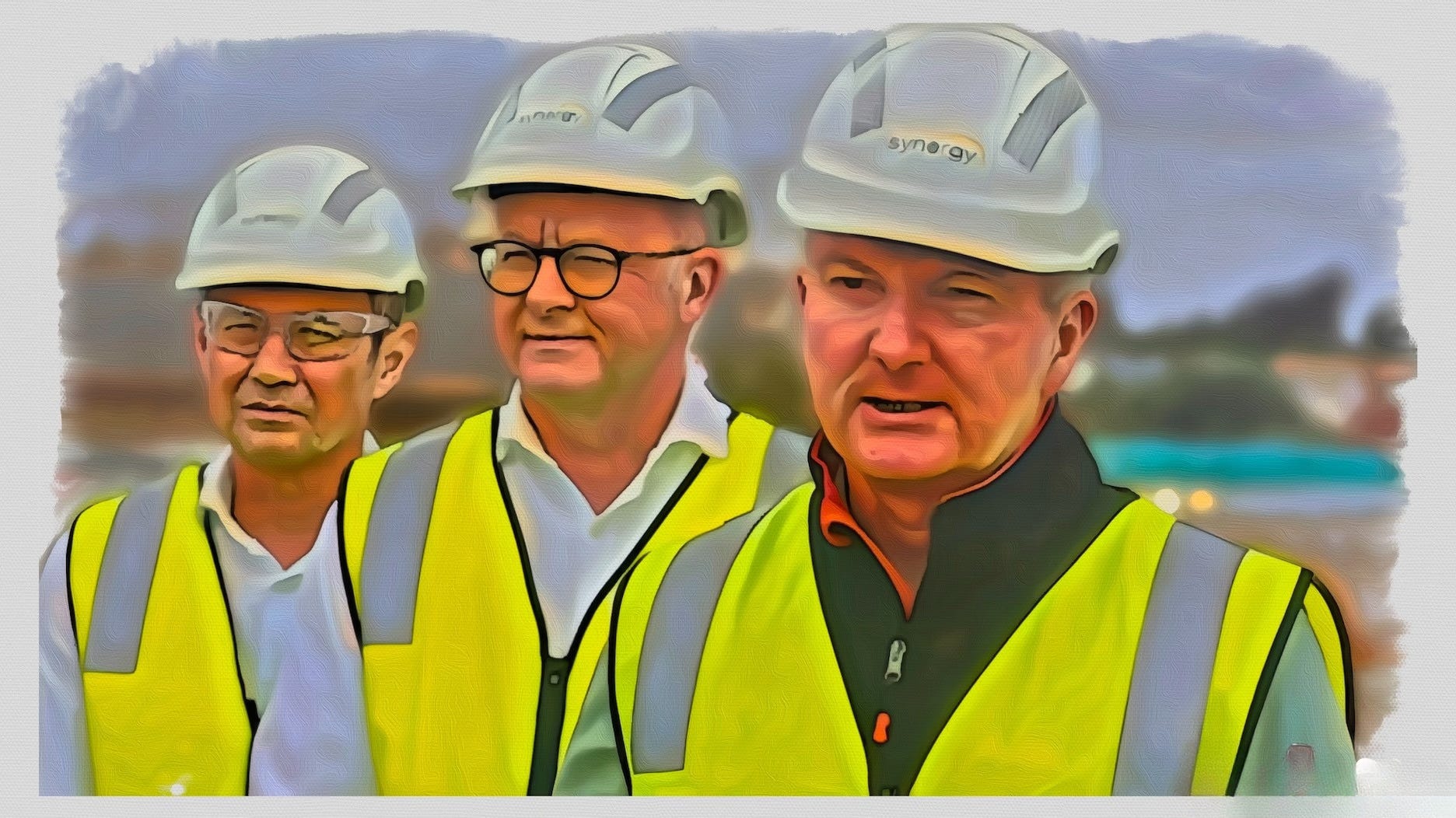
Last week, Chris Bowen delivered an agenda-setting speech as President of Negotiations for the UN’s climate change process.
For those in the global warming game, it was a big deal: the President’s opportunity to set the tone for COP 31, the climate jamboree scheduled for Antalya, Turkey, in November.
When you cut through the blah blah, the remarkable thing about President Bowen’s speech was his comments on the Net Zero 2050 goal. Remarkable, because he didn’t make any.
The goal of eliminating net greenhouse gas emissions by the middle of the century wasn’t even hinted at, neither in his speech nor in the accompanying press conference.
Fashions come and go. When Bowen was first sworn in as Energy Minister four years ago, net-zero was all the rage. Four months after assuming office, the Albanese government persuaded Parliament to lock its net-zero commitment into law.
It established the Net Zero Agency, allocating $53 million annually. As recently as last September, the government proudly announced a $5 billion net-zero package, promising to transform the national economy.
And then suddenly, six months ago, the net-zero pronouncements stopped.
Net Zero had become a friendless cause, abandoned by its former champions, languishing at the back of the wardrobe with the Paisley ties and wide-collared polyester suits.
Labor realised that the politics of climate change had been lost. Its climate change policy had become a liability. Away from the inner city, climate denial had become a political plus.
Yet while the politics have turned, the global warming industrial complex rolls on. Net Zero has lost the argument but retains the machinery: department chiefs, regulators, consultants and rent seekers with incomes, by Bowen in his presidential speech: an increase in the share of energy delivered as electricity worldwide from 23 per cent to 35 per cent by 2035.
The commitment rolls off the tongue smoothly, yet, like net zero, it is utterly delusional.
Lifting electricity’s share of global energy consumption by such a staggering amount would demand the largest industrial transformation in human history in less than nine years.
More than half a century of infrastructure replacement in a single decade, at a time when voters in many countries are rebelling against the costs of the transition.
It makes heady assumptions about the progress of technology, assuming that heavy industrial processes, agriculture and transport can seamlessly transition from coal, oil and gas to batteries. We can safely assume that green hydrogen won’t be the last broken dream on this bold leap into the unknown.
Unwittingly, Bowen’s latest vanity target has drawn attention to an even wilder assumption baked into the renewable energy roadmap. In 2022, the Australian Energy Market Operator took a stab in the dark and predicted that total electricity demand in Australia would double from 180–190 TWh/year in the early 2020s to around 360–390 TWh/year by 2050.
Yet future electricity demand over the next three decades is inherently unpredictable. A transition to wind, solar, and hydro would be challenging to scale up if demand for electricity turns out to be higher than predicted.
That is exactly the position Australia finds itself in with the explosion in demand for power-hungry data centres driven by the arrival of artificial intelligence. The increasing demand for AI was barely factored in when Labor came to power.
The disconnect between Bowen’s ambitions for an electrified global economy and the very real risk of power shortages came to a head this week, as AEMO warned of blackouts and grid instability.
Australia’s 162 operational data centres already account for around 2% of today’s grid-supplied electricity use.
Data centre consumption is forecast to increase by around 25% annually to reach approximately 12 terawatt hours (TWh), or around 6% of grid-supplied electricity, by 2030, before continuing to climb to around 34 TWh, or 12%, by 2050.
Yet the rollout of renewable energy generators and transmission lines is already way behind schedule. Expectations for offshore wind and green hydrogen production have been drastically reduced in the four years since a fresh-faced Labor energy minister took over his current portfolio.
Of the hundreds of projects Bowen describes as “in the pipeline”, only a handful stand a hope of coming out at the other end. Financial approval is becoming harder to obtain amid stubbornly high interest rates. Uncertainty about demand patterns, grid security and return on capital makes the construction of business cases challenging, to put it mildly.
Yet now, from his elevated position near the top of the global climate cult, Bowen is demanding that the global electrification project be accelerated.
It is pure fantasy, a collective exercise in hubris, unmoored to engineering advice, the tightness of the capital market or realistic expectations about technological evolution.
There is a reason One Nation’s support continues to grow. Australians have grown exhausted by a political class that appears increasingly insulated from practical constraints, economic trade-offs and democratic consent. Every new declaration from the climate establishment reinforces the impression that the governing class is talking to itself.
"Net Zero has lost the argument but retains the machinery: department chiefs, regulators, consultants and rent seekers with income." This sounds to me that the machinery is redundant and should be sent to Whyalla as scrap and melted down.
Wind droughts are the reason why net zero by wind and solar can't work and the Australians Paul Miskelly and Anton Lang blow the wistle over a decade ago but no journalist is telling the story despite 100 on my list getiing updates on the story since 2020.
Shame!
https://rafechampion.substack.com/p/australian-pioneer-wind-watchers