
Fatal attraction
Winning back conservatives who've fled to Pauline Hanson begins with understanding her appeal

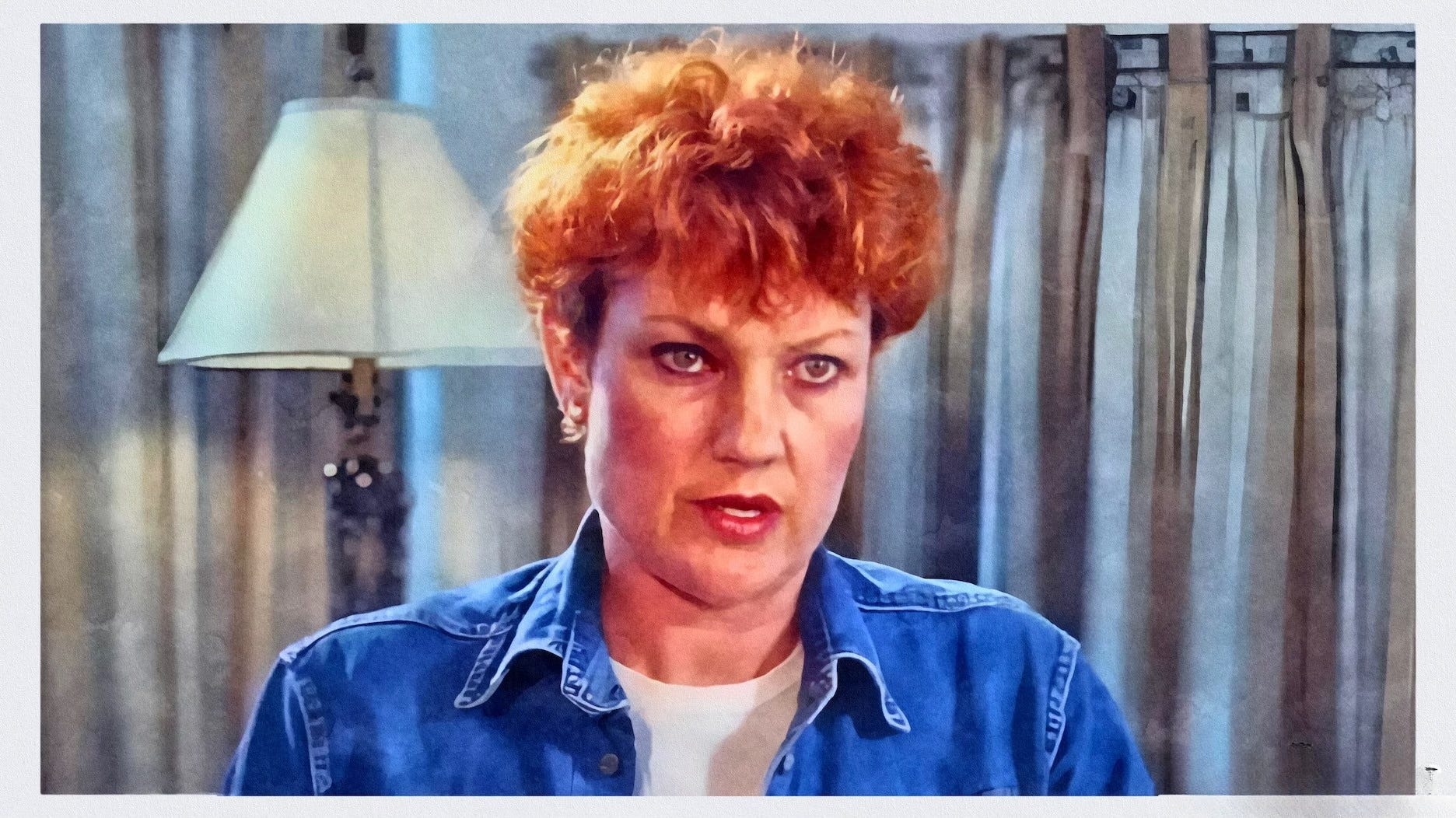
Australia’s cloistered elite would have met plenty of people like Pauline Hanson if they’d plucked up the courage to spend quality time with locals in almost any pub more than a 30-minute drive from the CBD.
Instead, Hanson came to them, arriving in Canberra like a creature from another planet, elected as the independent MP for Oxley at the 1996 election.
Three decades later, many politicians, journalists and commentators have yet to come to terms with the Hanson phenomenon. They have at least learned that she can’t be talked down to, talked over, or wished away. Their patronising sneers have made her stronger. Inflating their rhetoric has devalued the currency to the point where being condemned as a racist or transphobic is almost a badge of honour.
If Angus Taylor has any hope of winning back the sprawling lost tribe of disgruntled Coalition voters, he should take stock of how John Howard survived the first disruptive wave of the Hanson phenomenon almost three decades ago.
Hanson’s popularity, then as now, was an act of rebellion against a political class who had become strangers in the country they sought to govern.
Her unexpected election win illuminated the new fault line in politics separating an articulate, university-educated elite and other Australians who thought of the world in practical, down-to-earth terms.
On one side were the anointed, the dreamers who believed that by applying their precocious intellects they could change the world to suit their particular tastes.
On the other side were the graduates from the school of hard knocks, resigned to living in an imperfect universe, but appreciating their great fortune in living in the best country on earth.
I traced the emergence of these two tribes in my 2013 book The Lucky Culture and the Rise of an Australian Ruling Class. Today, these two tribes have moved even further apart, mixing in different circles in separate moral universes.
The groups brush shoulders in both major parties, raising tensions in both. In time, breakaway movements of disgruntled progressives headed off to form new parties, leading to the rise of the Australian Greens in 1992 and more recently the teal independents.
Superficially, Labor appears to have adjusted to this polarising development. Just below the surface, however, tensions are strong, particularly over issues such as Palestine and the environment.
The Liberal Party, however, has been paralysed by a seemingly permanent identity crisis that has rendered it unelectable. Is it Arthur or Martha? Should it move closer to the Teals or One Nation? Questions of this sort have remained unresolved in the party room for a decade.
Meanwhile, Hanson looks on, supremely at ease, having nailed her colours to the mast in her Maiden speech almost 30 years ago.
“I come here not as a polished politician but as a woman who has had her fair share of life’s knocks,” she began. “My view on issues is based on common sense.”
Taylor’s mission is to put an end to the civil war in the Liberal Party once and for all. Framing the challenge as a choice between moving to the left or right is misleading and provocative.
Instead, he should follow Howard, taking his cue not from opinion polls but from his own conviction and the party’s tried-and-tested principles: pragmatic classical liberalism with a conservative anchor.
He can start by taking a firm stance on immigration based on his convictions, backed by the Liberals’ track record of keeping borders safe. It will be a powerful platform to take the next election against a government that seems unable or unwilling to stem the flow of net arrivals, and against One Nation, which is strong at identifying problems but not at developing the policies to solve them.
In other words, Taylor must stick to his natural game, just as Tony Abbott did in 2013 when he won a landslide on a platform of border protection and nation building.
He must turn his strength in economics to recover the Coalition’s reputation as the party that takes care of taxpayers’ money and is best equipped to end the cost-of-living crisis.
The alternative – a party in which vital policy decisions remain unresolved – is unimaginable to those who revere the wisdom of Robert Menzies.
A stand-for-nothing party would only accelerate the rush to the exit. At the rate that the party has been losing voters since the election – almost 50,000 a week – the Coalition would win no votes at all if an election were called this time next year.
Hanson would have done to the Liberal Party what it tried but failed to do to her 30 years ago when it attempted to wipe her off the political map.
That Taylor has the hardest job in Australian politics right now is stating the obvious. Yet Labor and One Nation underestimate the threat he poses at their peril.
Some critics try to portray him as rich and entitled, far removed from the world of the common person. They plainly know nothing about his rural background or the trajectory of his political career.
Taylor represents the seat of Hume, once a largely rural seat stretching as far as Yass. Over successive elections, he captured Goulburn’s solid working-class, former Labor-voting booths, until the 2024 redistribution, which shifted the seat towards Sydney on the Hume Highway.
Today, Hume is more characteristic of an outer-metropolitan electorate. It extends to the edges of Liverpool and Campbeltown, populated by aspirational working-class voters in what is fast becoming the new mortgage belt. An increasing number of his constituents live in new subdivisions where mortgage stress is endemic.
This is, in other words, the new battler territory, populated by the kind of voters Robert Menzies once called the forgotten people. Few of them share the elite concerns on climate change or refugees, so common in Mosman or Vaucluse. Indeed, One Nation must be eyeing them up as potential recruits.
Last May’s disastrous election for the Liberal Party, the worst since the party was founded in 1944, returned only one NSW Liberal MP to Canberra with an increased majority.
That was - you’ve guessed it - Angus Taylor in the seat of Hume with a swing of 1.3 per cent on the primary vote.
The lesson of 1996 is not that Hansonism can be crushed. It is that it must be understood. Howard survived because he anchored himself to conviction and trusted voters to respond. Taylor must do the same, neither parroting Hanson nor appeasing the teals. By recovering the Liberal Party’s settled sense of purpose, he may yet turn a moment of fracture into one of renewal.
Well said Nick. Dismissing the rise of Pauline Hanson is foolish and leaves major parties vulnerable
It seems as if you are clinging on to this idea of liberalism. I think it is dead. It always was a nasty ideology rooted in relativism. That’s why we still have 18c and the changes to the sex discrimination act and we followed the US into useless forever wars that went no where and only produced chaos. Howard jailed Hanson but she triumphed over that.
After had those ghastly years of KRudd/ Hillard /Krudd we got Abbott but he was short lived and the Liberals didnt seem to be able back up a principled leader who maybe would have got to the principled stand on culture issues, immigration and the economy.
Meanwhile Hanson did the hard yards.
I have no idea if Taylor can go the course but he is their best hope. They have to stop leaking to the media though. That is a bad look. So tired of hearing, my sources tell me…. Sky makes coalition politics with a few notable exceptions so sleazy. Meanwhile I will stick with ON.