
Please Explain
MONTHLY ESSAY: The rise and rise of Pauline Hanson

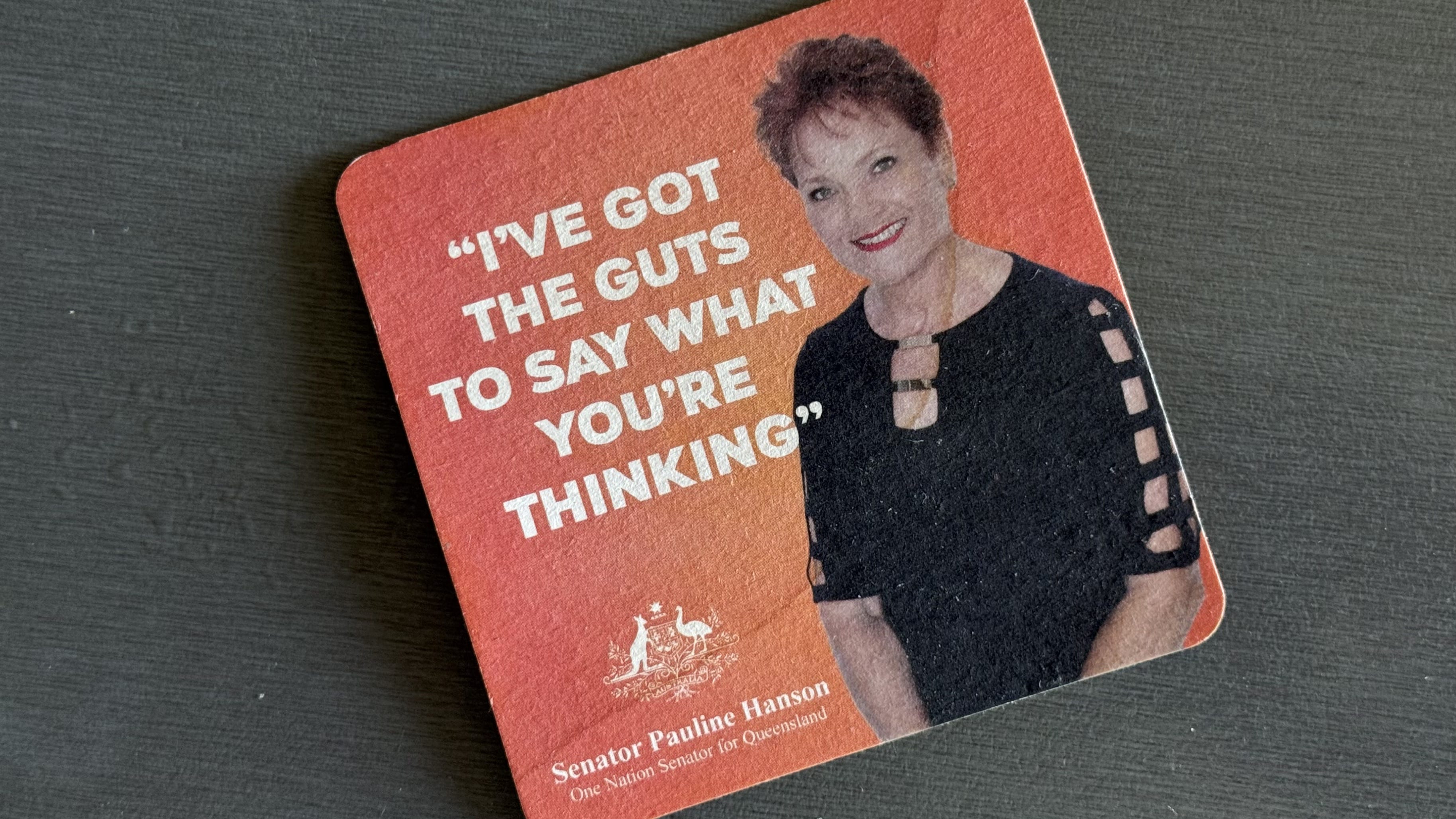
At 5.15 pm on September 10, 1996, a Queensland fish-and-chip shop owner stood in the House of Representatives to deliver a maiden speech that changed Australian politics.
At precisely the same moment in another chamber, Greens senator Bob Brown was making his first contribution to Parliament.
Six months after John Howard’s promise of stability following the Keating years, the contours of a new political era were already emerging.
Reviewing Hansard today, it is Hanson’s speech that ages best. She spoke directly about the principle of equality before the law, raised concerns about the negative impact of racial preferential treatment, emphasised the widening gap between ordinary Australians and political elites, and highlighted the shift from practical to symbolic political causes.
She was immediately branded racist — despite explicitly rejecting racial hierarchy in favour of equal treatment.
In contrast, Brown’s speech reflects the outlook of 1990s progressive circles. He predicted environmental disaster, worsening poverty in developing countries, and increasing global inequality—predictions that mostly did not come to pass.
India, which he forecast would sink deeper into poverty, has since lifted hundreds of millions out of it. Food production soared. Living standards rose dramatically. Yet these abandoned causes were not really about results. They were moral performances — a way for the new political class to display virtue, urgency and superior enlightenment. Hanson entered politics as a revolt against that class.
With the collapse of communism, the Western Left did not abandon crusading politics; instead, it shifted its focus from class struggle to concerns such as environmental apocalypse, identity politics, and symbolic justice.
The Greens embodied this new approach—more passionate and doctrinaire than the older, more moderate Australian Democrats, who had themselves transformed politics into a catalogue of moral causes over practical governance.
Thomas Sowell described this phenomenon as the “vision of the anointed”: a self-regarding intellectual class convinced of its moral superiority, impervious to evidence, and intolerant of dissent. Those who disagreed were not merely wrong — they were sinful.
By the 1990s, this mindset dominated universities, media and much of the political establishment. As professional politicians increasingly came from law schools and political staff roles, rather than run-of-the-mill workplaces, politics hardened into a closed world.
The distance between rulers and ruled grew. Inevitably, that tension ruptured—with Pauline Hanson as its expression.
